
Asset Management
Water & Wastewater Asset Management Under AWIA: A Capital Planning Checklist
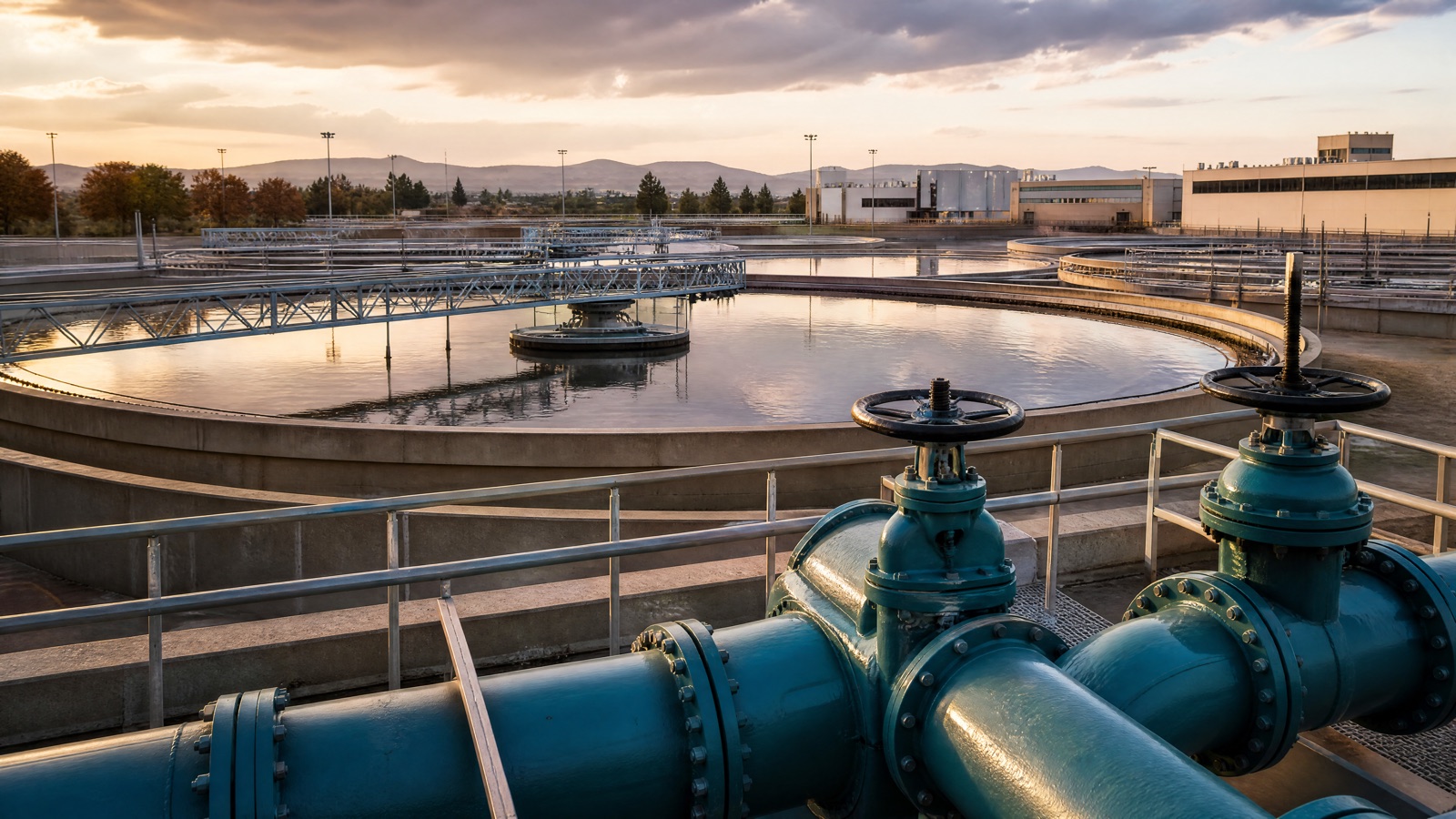
Quick answer. A water utility asset management plan is a documented program for tracking a utility’s physical assets, assessing their condition and risk, and planning the renewals and replacements needed to sustain service at an acceptable cost. Under the America’s Water Infrastructure Act (AWIA), community water systems serving more than 3,300 people must conduct risk and resilience assessments and maintain emergency response plans — work that turns on the condition and criticality data a structured asset-management program provides.
Water and wastewater asset management under AWIA: what the law requires of your capital plan
A water utility asset management plan is the bridge between knowing what you own and deciding what to fund: it inventories assets, scores their condition and likelihood of failure, weighs the consequence of failure, and feeds a prioritized, multi-year capital improvement plan. The America’s Water Infrastructure Act (AWIA) makes part of this mandatory. Under EPA’s implementation of AWIA Section 2013, community water systems serving more than 3,300 people must conduct risk and resilience assessments and maintain emergency response plans. That assessment requires evaluating the condition of physical infrastructure — so asset management, understanding asset condition, criticality, and remaining useful life, is what supplies the data the work depends on.
This checklist is written at the decision and software layer. It does not re-explain the statutory deadlines EPA already publishes; it shows how a utility turns the AWIA mandate into a defensible, fundable capital plan — assessing pipe risk, prioritizing renewals, and choosing a CIP horizon — and where capital planning software replaces the spreadsheet workflow most utilities still use.
The same inventory-condition-risk data that satisfies the AWIA risk and resilience assessment is exactly what builds a defensible capital plan — risk equals probability of failure times consequence of failure.
Does AWIA require an asset management plan?
AWIA requires covered community water systems to assess risk and resilience and maintain emergency response plans; the assessment must evaluate the condition of physical infrastructure, which is precisely what asset management — condition, criticality, and useful-life analysis of physical assets — produces. In plain terms: if your system serves more than 3,300 people, you must understand the condition and risk of your pipes, treatment, storage, and pumping assets well enough to assess resilience, and a structured asset-management plan is how utilities meet that bar in practice. AWIA applies to drinking-water community systems; many states and the Clean Water State Revolving Fund extend similar asset-management expectations to wastewater utilities, so most utilities plan both sides together.
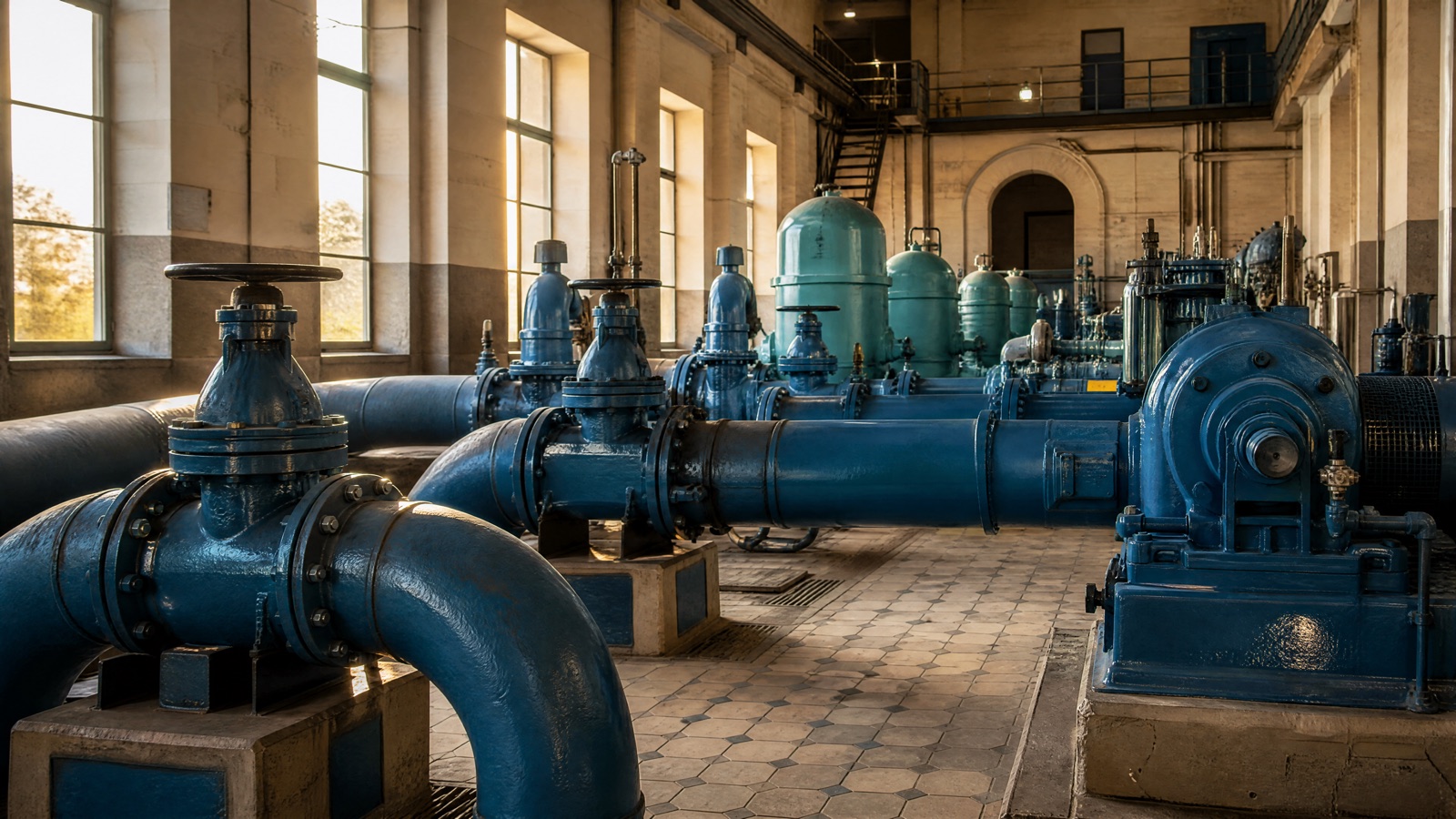
Water mains, valves, and pump stations are the buried, condition-driven assets AWIA asks utilities to assess.
The compliance reading is narrow, but the planning opportunity is broad: the same inventory-condition-risk data that satisfies AWIA is exactly what an infrastructure asset management program needs to build a defensible capital plan. Doing the work once, well, serves both.
The AWIA capital planning checklist
A capital planning checklist for an AWIA-driven utility sequences the work from inventory to funded CIP, so each renewal project can be defended to a board, a rate review, or a state revolving-fund reviewer. Work the list top to bottom.
| Step | What to do | Why it matters |
|---|---|---|
| 1. Inventory assets | Catalog pipes, mains, treatment, storage, pumps, and valves with material, age, and location from your EAM/GIS. | You cannot plan or assess risk for what you have not recorded. |
| 2. Assess condition | Score current condition from inspection, break history, and performance data. | Objective condition replaces complaint-driven decisions. |
| 3. Score likelihood of failure | Use age, material, soil, and break history to estimate probability of failure (PoF) per asset. | Buried pipe cannot be eyeballed; risk must be modeled. |
| 4. Score consequence of failure | Weight criticality — population served, redundancy, hospitals, water quality, and environmental exposure. | A main by a hospital outranks an identical pipe in a field. |
| 5. Prioritize renewals (risk = PoF × CoF) | Rank candidate projects by risk and document the scoring rules. | Reproducible priority order survives audit and rate scrutiny. |
| 6. Forecast deterioration | Project condition forward so each project carries a cost of waiting. | Justifies preserve-now vs. replace-later decisions. |
| 7. Model funding scenarios | Compare 5-, 10-, and 20-year CIP scenarios and their effect on risk and rates. | Turns a budget ask into a defensible service-level choice. |
| 8. Adopt and export the CIP | Produce a board- and SRF-ready capital improvement plan from the ranked list. | Closes the loop from AWIA data to funded projects. |
How to prioritize pipe replacement defensibly
Pipe replacement prioritization is the practice of ranking which mains to renew first using risk — the probability that a pipe fails times the consequence if it does — rather than reacting to the last break. Because most water and wastewater assets are buried and invisible, condition must be inferred from age, material, soil conditions, and break history; that is precisely the kind of pattern problem machine-learning deterioration models handle well. For the methodology, see how to prioritize infrastructure projects and AI vs. traditional deterioration models.
A defensible prioritization does three things a reactive program cannot: it ranks the whole network on one consistent risk basis, it forecasts where condition is heading so you can time renewals before failure, and it produces an auditable record of why each project ranked where it did — the record a rate review or board demands.
A defensible prioritization ranks the whole network on one consistent risk basis, forecasts where condition is heading, and produces an auditable record of why each project ranked where it did.
Brand disambiguation. InfraMind plans capital; InfraMind Labs inspects structures. InfraMind is AI capital planning software that consumes your condition and break data to forecast risk, prioritize renewals, and build a defensible utility CIP. It does not perform pipe inspection, leak detection, or condition monitoring.
What CIP horizon should a water utility use?
A utility CIP horizon is the number of years a capital improvement plan looks ahead, and water and wastewater systems typically run a layered set — a detailed near-term plan inside a longer strategic view. GFOA recommends a CIP cover at least three and preferably five or more years; see GFOA multi-year capital planning guidance. For water utilities, the long asset lives of buried pipe push planning out further:
- 5-year CIP: the funded, detailed program tied to the rate plan and SRF applications.
- 10-year plan: the renewal pipeline that smooths rate impact and sequences major mains.
- 20-year+ outlook: the strategic view that matches replacement pace to the deterioration of long-lived assets, so the utility is not perpetually behind.
Water utilities layer horizons: a funded 5-year CIP nested inside a 10-year renewal pipeline, inside a 20-year-plus strategic outlook.
For the vertical view, see capital planning for water & wastewater utilities; for the end-to-end method, see how to build a capital improvement plan, and review how to buy for the direct quote and RFP procurement path.